Extensive research has made it clear that there are many benefits of bilingualism in early childhood. These benefits include improved memory, better social development and enhanced ability to apply logic and focus. For parents, it’s important to understand that early childhood is a unique window of time in their child’s development.
The benefits of being bilingual as a child are hard to overstate. If you give your child the gift of bilingualism, either through a Spanish immersion program or by raising your child in a bilingual home, you’ll be providing your child with important advantages.
Key Takeaways
- The early childhood years—birth to age 5—are the optimal window for bilingual language acquisition.
- Bilingual children develop stronger cognitive control, memory and academic skills that grow over time.
- Social and cultural benefits include building empathy and communication skills that last a lifetime.
Why Early Childhood Is the Optimal Window for Bilingualism
If you’ve ever tried to learn a new language later in life, you know how difficult it can be. Children make it look easy. They make progress in leaps and bounds.
There’s a reason for that: The human brain is remarkably adaptable during early childhood. The technical term is “brain plasticity,” but the effect is that kids can learn faster and better than we can as adults.
Young children gain language skills naturally, by interacting and through play, long before they become self-conscious. The older people get, the more fear of making mistakes or looking foolish hampers their ability to learn.
Bilingual child development takes advantage of this key window of opportunity. Learning a language with the right curriculum during early childhood can put your child in the best position to succeed.
Cognitive Benefits of Bilingualism in Young Children
One of the vital benefits of being bilingual as a child is the enhancement of executive functioning. Executive function refers to cognitive skills that help you succeed at almost any task. Bilingualism helps children build and refine these skills.
- Attention and focus: Bilingual children show improved ability to stay focused on tasks and pay attention in and out of the classroom.
- Working memory: Working memory refers to the ability to hold information in your mind and use it to complete a task. For kids, it’s working memory that helps them follow two-step instructions, such as “brush your teeth, then get into your pajamas.”
- Cognitive flexibility: This skill involves the ability to look at a situation from more than one angle and tailor your response appropriately. It also concerns the ability to switch between tasks smoothly. Speaking two languages fosters this because they are used to looking at things through two different lenses.
- Metalinguistic awareness (understanding how language works): Language is a tool that many people use without truly understanding it. Most people learn language by copying others, not by studying it. Bilingual people do this, too, but they also gain a greater understanding of how language works because they can compare two languages with each other.
Academic Benefits: How Bilingualism Supports School Readiness and Achievement
While the benefits of bilingualism in early childhood are clear, some parents worry that learning a second language could slow their child’s overall academic progress. Fortunately, research suggests that the opposite is true.
Bilingual education actually has a positive impact on academic achievement. Far from slowing down your child’s academic growth, the benefits listed above can make kids better students. Bilingualism is a path to new ways of thinking and learning that are hard to beat.
At times, children may switch languages or seem to fall behind in English. But in fact, with proper support, children in bilingual environments often outperform their monolingual peers. There is simply no academic downside to bilingual child development.
Of course, there are further benefits that come from picking the right bilingual program—one that will properly nurture your child’s growth.
At Casa de Corazón, our preschool and pre-K programs are carefully designed to help children advance cognitively, socially, physically and emotionally. Spanish immersion is just one part of what we provide.
Social-Emotional Benefits: Building Empathy, Connection and Cultural Confidence
When considering the bilingualism benefits for children, empathy, connection and cultural confidence should not be underestimated. In fact, these are key values at Casa de Corazón. Here’s why.
Bilingual education helps children understand and appreciate the value of other cultures, which is vital for our modern world. Intercultural awareness and empathy help children learn the value of diversity on a personal level. It also helps children grow in confidence when it comes to navigating other cultures.
There’s a strong connection between bilingual education and empathy. Studies show that bilingual children and children who are exposed to another language on a regular basis have a greater ability to see things from other people’s points of view. That ability helps children grow into caring and responsible global citizens.
What Bilingualism Looks Like in Practice at a Spanish Immersion Program
The developmental benefits of bilingual education are clear, but they’re not what’s going to make your child happy to go to daycare or preschool. Your child wants a fun, caring learning environment.
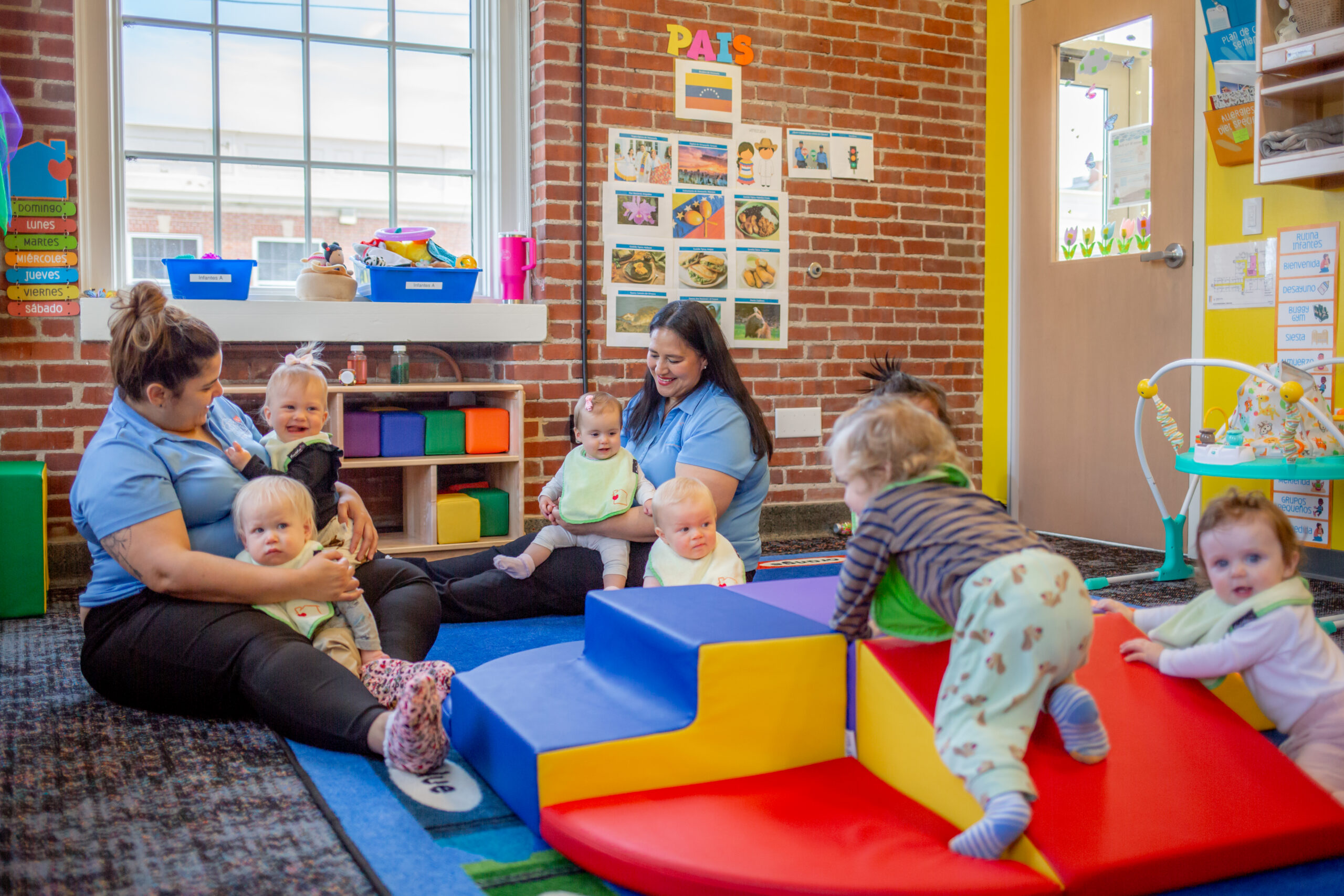
At Casa de Corazón, we incorporate Spanish immersion into an experience that supports your child’s whole development. That includes care for the mind, body and heart. Children at Casa de Corazón enjoy enriching activities, including circle time, songs, play, healthy meals and snacks, and time spent with friends.
Successful learning at early ages is not about pressure tactics. It’s about making learning fun, accessible and age-appropriate. Our programs include infant daycare, toddler Spanish immersion daycare and a Spanish immersion preschool.
Common Concerns Parents Have About Bilingualism (Answered)
It’s natural to have concerns, even when the benefits of bilingualism in early childhood are clear. Here are a few things parents should know.
“Will my child get confused?”
No. During early childhood, kids have an amazing ability to process language. They don’t get confused; they expand their cognitive abilities.
“Will English fall behind?”
Again, no. Spanish immersion doesn’t slow progress in learning English. Learning more than one language can help your child gain a better understanding of how languages work. It adds to their education, rather than slowing one area to serve another.
“Is it too much for a young child?”
Our programs are designed to nurture children, not overwhelm them. The environment isn’t one of academic pressure, but rather one of positive social and emotional learning.
Frequently Asked Questions About Bilingualism in Early Childhood
What Are the Main Benefits of Bilingualism in Early Childhood?
Bilingualism in early childhood aids executive function, memory and focus. It enhances problem-solving and creativity, supports cultural identity and empathy, expands social awareness and offers many academic advantages. It can help your child on cognitive, social and emotional levels.
Does Being Bilingual Confuse Young Children?
No, bilingual education is not confusing to children. However, to parents, a phenomenon known as “code-switching” can be mistaken for confusion. Code-switching describes when a child swaps in words from one language while using the other.
When Spanish words creep into a conversation in English, parents can mistake that for confusion. It’s actually a normal, healthy sign of bilingual development.
When Is the Best Age To Start Bilingual Learning?
The human brain is at its most flexible and adaptable (in other words, it has the most brain plasticity) in the very beginning of life. From birth to age 5, children have a unique opportunity to learn languages with ease. When it comes to learning a new language, the earlier the better.
Can Bilingual Children Succeed Academically in Both Languages?
Yes! In fact, it’s common for bilingual children to excel in both languages. Research supports the many cognitive benefits of bilingualism, including the benefits to proficiency in both languages.
Just remember that academic proficiency develops over time. It can take years to go from speaking a few words to true mastery of the language.
Give Your Child the Bilingual Advantage — Starting Now
If you’re interested in the benefits of bilingualism in early childhood, we’re here to help.
Research shows that bilingual children have advantages in cognitive control, working memory, attention and focus—all of which can help their academic career. Bilingualism also offers social and cultural benefits, helping children build empathy and appreciate other cultures.
To see how Casa de Corazón can support your child, take a moment to find a location near you and schedule a tour to learn more about what Spanish immersion can offer for your child.