Spanish Immersion Preschool and Early Bilingual Literacy
If you’re worried that learning Spanish will delay your child’s English abilities, fear not. Absorbing two languages in early life actually gives kids a leg up in nearly all aspects of learning.
Phonemic Awareness Across Two Languages
Phonemic awareness is the ability to hear, identify and manipulate the small sounds (phonemes) that make up words. It’s all about spoken language, not printed letters.
Bilingual preschool education is a natural way to build phonemic awareness in two languages. Hearing both Spanish and English as a youngster means:
- Kids are exposed to the sounds of both languages, so they start recognizing and mastering how to put sounds together to form words.
- Differentiating the sounds of both languages can help sharpen their listening skills.
- They’ll be ready for reading and writing because they’ll understand that words are made up of small sounds, making it easier for them to sound out or spell words.
Vocabulary Depth and Cognitive Flexibility
Planning, organizing and managing time are critical skills. They require a good working memory and the ability to adjust to new situations. Bilingual children are uniquely able to develop these “executive functioning” skills because:
- Their brains easily switch between two language systems, boosting cognitive flexibility (think of it as a mental workout).
- Bilingual people’s brains are trained to ignore irrelevant information.
- The added agility from learning multiple languages makes it easier for the brain to shift and adapt to new information.
In addition, children who speak two languages have broader vocabulary networks, strong memory pathways and good attention control. All of these naturally occurringSpanish immersion preschool benefits lay the foundation for good executive functioning.
English Development in a Spanish Immersion Setting
Study after study confirms that Spanish immersion preschools and early learning programs actually enhance English language development. Research shows that immersion students often demonstrate higher academic achievement, including in English, by the end of elementary school.
Any temporary, early-stage lags in English reading or writing disappear by elementary school. And mixing languages is healthy, not a sign of failure. Over time, your child will recognize how and when to switch between languages.
What Makes a High-Quality Spanish Immersion Preschool Effective?
Once you’ve decided to take advantage of the benefits of Spanish immersion preschool, you’ll want to find the right fit. There are great schools around Minnesota and Wisconsin. When making your decision, here are some things to look for.
Play-Based, Research-Aligned Curriculum
The quality of the curriculum should be among your top priorities. Look for a school with an NAEYC-approved curriculum that draws on child development research. An accredited curriculum means the school has teachers who value:
- Both play-based and classroom learning
- Both individual and group instruction
- Cultural and social aspects of teaching
- Enrichment activities outside the walls of the school
Additionally, for kids, language is learned and remembered when tied to movement, storytelling, sensory play and hands-on exploration. Find a program that highlights those methods over stringent vocabulary lessons.
Consistency and Structure
Children thrive in routines covering a variety of learning methods. At Casa de Corazón, your child will have a predictable day filled with caring connections.
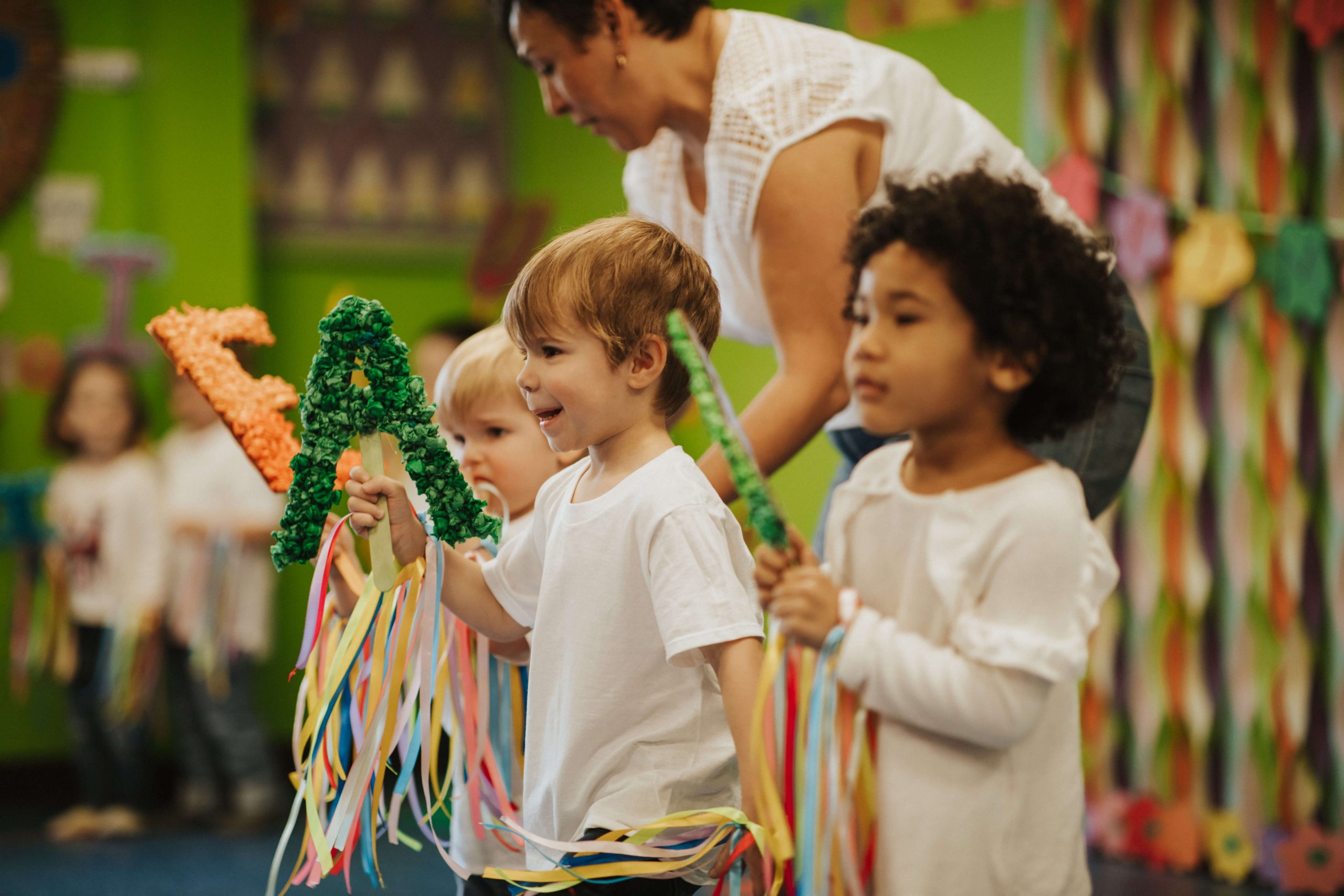
As an example, a typical Casa de Corazón Spanish immersion preschool day usually includes time at the park or indoor gym, a large-group question of the day, reading aloud and directed play in small groups. Being immersed in Spanish and learning through visual cues and other modeling will enhance their learning experience.
This steady routine with constant reinforcement will create a natural flow in both languages.
Family Partnership
Many English-speaking families don’t speak Spanish. Parents often worry this will hinder their child’s Spanish learning or cause confusion and frustration. It’s so common that we wrote about how to raise a bilingual child.
Importantly: Parents do not need to learn Spanish! What matters is that you encourage your child and keep them exposed to the language. You can read or sing with your child in Spanish, and you don’t have to be perfect; enthusiasm is what matters.
Our teachers can help families incorporate Spanish at home. We’ll provide you with resources and guidance every step of the way.
FAQs About Spanish Immersion Preschool
Is a Spanish Immersion Preschool Good for Children?
Absolutely. Spanish immersion preschool supports early language development, builds cultural awareness, strengthens cognitive skills and helps children become confident communicators while learning naturally through play, songs, stories and daily interactions.
Will My Child Be Confused in a Spanish Immersion Preschool?
No, most children are not confused in a Spanish immersion preschool. Young learners naturally absorb multiple languages. With consistent exposure, supportive teachers and playful learning, children understand context and communicate comfortably in both languages.
How Does Immersion Build Confidence?
Language immersion builds confidence by giving children daily opportunities to listen, understand and speak in real situations. As they successfully communicate and interact, their comfort grows, as does their belief in themselves.
Do Parents Need To Speak Spanish at Home?
No. Immersion works even when Spanish is only spoken at school. Children gain language skills through consistent exposure at school, while parents can support immersion by reading or singing together and showing interest in their child’s learning.
Does Spanish Immersion Support Kindergarten Readiness?
Yes. Spanish immersion builds early literacy, listening and social skills. Children practice following directions, communicating with peers and developing curiosity and confidence, all of which help them transition successfully into kindergarten classrooms.
The Bottom Line: A Spanish Immersion Preschool Builds More Than Language
A high-quality Spanish immersion preschool goes beyond language learning. It helps children:
- Speak confidently in two languages.
- Develop early literacy foundations.
- Strengthen executive function.
- Build empathy and cultural awareness.
- Enter kindergarten prepared and self-assured.
Explore our preschool and pre-K programs to see how Casa de Corazón builds bilingual confidence every day. We would love to give you a tour! Find a location near you and schedule a time to experience Spanish immersion in action.