Bilingual education is one of the more heavily researched topics in the field of child development. Decades of studies point to the same conclusion: Learning in two languages strengthens children’s cognitive development, boosts academic achievement and promotes social-emotional growth.
Yet many parents still have questions. Will learning two languages confuse my child? Could it delay speech or make learning English harder? It’s only natural for concerns like these to arise.
Let’s put those worries to rest by exploring what the research really says about bilingual education benefits. We’ll also go over why experts support bilingual language immersion at an early age.
Key Takeaways
- Bilingual education strengthens executive function, focus and problem-solving in children from an early age.
- Academic outcomes for bilingual learners match or exceed those of their monolingual peers over the long term, and English language skills are not hindered.
- The social and cultural benefits of bilingualism prepare children for an increasingly connected world.
What Is Bilingual Education?
Bilingual immersion education is not like a language class. Instead of teaching a second language for just a few hours each week, bilingual immersion programs use both languages as the basis for learning throughout the school day.
Children in immersion schools learn everyday subjects like math, reading and social studies, but in two languages rather than one. Foreign language classes in other schools focus mainly on teaching the language itself, while bilingual education helps children build knowledge and academic skills in both languages.
Cognitive Benefits of Bilingual Education
Because bilingual children regularly switch from one language to another, their brains get practice in switching tasks and adjusting their approach. Over time, this mental workout can strengthen the following mental capabilities:
- Executive function: This is the brain’s ability to plan, organize, remember information and manage behavior.
- Cognitive flexibility: This refers to the ability to easily switch between tasks, ideas or ways of thinking.
- Focus and attention: Bilingualism helps improve concentration in the face of distractions and increase control over impulsive responses.
Problem-solving: The open-mindedness of bilingual kids means they are willing to consider different approaches and find creative solutions.
One of the most-studied bilingual education benefits is its impact on executive function. You can think of executive function like the brain’s “management system” that helps humans pay attention, remember instructions, control impulses and adapt to new situations.
You can see how these skills, along with the others listed, all contribute to a child’s ability to concentrate and act appropriately during school. Bilingual students achieve these cognitive benefits right when they enter a classroom setting, but also over the many years of their academic career.
Academic Benefits: Does Bilingual Education Help or Hurt Performance?
At Casa de Corazón, one of the most common fears we hear is that learning two languages will slow a child’s English development or academic progress. Bilingual education research consistently shows that it does not.
A toddler or very young child may not know many words in each language at the start of a bilingual program. To parents, this can feel like their kids are falling behind.
But as dual language exposure increases, any early lagging in English vocabulary disappears by mid-elementary school. Long-term studies find that students in well-designed bilingual education programs perform as well as, and often better than, their monolingual peers.
Rather than competing with English, a second language can support literacy and learning across subjects. The key factor is not whether a child learns two languages, but whether the bilingual program is high-quality, developmentally appropriate and consistently implemented.
Social-Emotional and Cultural Benefits
If you’re still wondering why bilingual education is important, think about it as more than pure language skills. It’s about how children understand and connect with the world around them. It’s why bilingualism is one of our core values.
Learning in two languages exposes children to different perspectives, traditions and ways of communicating. This helps them build empathy and respect for people from diverse backgrounds. As they interact across cultures, they gain confidence communicating with a wide range of people and come to view interculturality as a way of life.
The ability to understand different viewpoints and communicate and collaborate with people of different backgrounds is an increasingly valuable life skill. Language immersion fosters cultural awareness and a broader worldview, equipping bilingual students with a level of social ability that will serve them well in adulthood.
Why Early Childhood Is the Best Time To Start
Early childhood is an ideal time to introduce a second language because a child’s brain really is like a sponge. During the first few years of life, children absorb language much better than adults do, thanks to the brain’s increased neuroplasticity.
Neuroplasticity, or brain plasticity, refers to the brain’s readiness to absorb new information and integrate it. Kids in early childhood absorb information from every aspect of their environment.
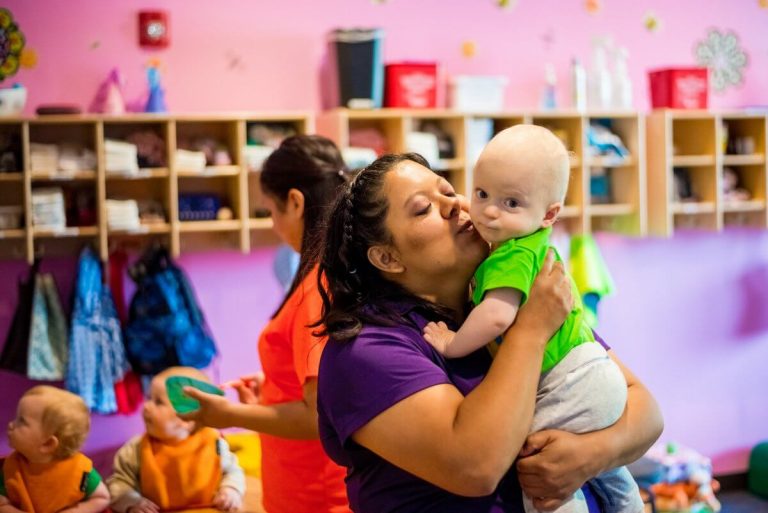
At Casa de Corazón, we ensure students are surrounded by a variety of stimuli, such as play, songs, stories and conversations. Rather than memorizing grammar rules, they learn intuitively by listening, exploring and communicating, all before they become self-conscious about making mistakes.
We weave bilingual experiences throughout our infant, toddler, preschool, and pre-K programs. This early language-learning window makes it easier for children to develop strong communication skills in more than one language. While people can successfully learn new languages at any age, it’s much harder as we get older.
What Makes a Bilingual Education Program Effective?
Research shows that the benefits of bilingual education depend greatly on how the program is designed and delivered.
High-quality bilingual programs create meaningful opportunities for children to use both languages throughout the day in engaging, supportive environments. Rather than treating language as a separate subject, they make it a natural part of learning, play and daily interactions.
When you’re evaluating Spanish-language programs for your child, here are a few key things to look for:
- Language-rich, play-based instruction: Does the program emphasize conversations, stories, songs, games and hands-on activities that make language meaningful?
- Consistent daily exposure across all routines: Is Spanish incorporated into learning, meals, playtime, transitions and classroom activities, or are there only short sessions of Spanish instruction?
- Warm, responsive teachers who build trust: Do students have strong relationships with teachers that help them feel confident in their language ability?
- Cultural integration beyond language: Does the facility truly integrate the traditions, stories, celebrations and perspectives of Spanish-language culture, or is it merely grammar and vocabulary?
Frequently Asked Questions About Bilingual Education
Does Bilingual Education Delay Language Development?
No, learning two languages does not delay English skills. Differences in vocabulary at young ages are common and temporary. In fact, one bilingual education benefit is that bilingual children’s English skills often surpass those of their monolingual peers by mid-elementary school.
What Are the Long-Term Benefits of Bilingual Education?
Children who receive a bilingual education emerge with stronger executive and cognitive function, leading to better-than-average academic performance throughout their academic careers.
Students also gain exposure to valuable social and emotional aspects of other cultures. This makes them better prepared to understand and work with a wider variety of people. Plus, the ability to switch between languages gives bilingual children a leg up when it comes to careers.
At What Age Should Bilingual Education Start?
As early as possible! The young brain’s unmatched ability to absorb language means the infant and toddler stages are ideal times to expose your child to multiple languages. That way, they learn the languages naturally, which leads to better outcomes than learning through rote memorization.
Is Bilingual Education Good for All Children?
It’s hard to imagine a child who wouldn’t benefit from being multilingual! Research supports bilingual education for all students, and any risks are actually nonexistent.
Plus, there’s essentially no downside to being able to communicate across cultures. It can help your child be a better student, a more understanding person and a more attractive candidate for all kinds of careers.
The Bottom Line: Bilingual Education Is One of the Best Gifts You Can Give Your Child
Bilingual education benefits go far beyond the ability to speak two languages. It’s actually a gift that lasts a lifetime for your child. A bilingual education provides strong thinking skills, steady academic growth and the confidence to engage with people from different cultures. It’s a foundation for how children think and connect with the world.
Research consistently shows that high-quality bilingual programs provide advantages that can last throughout a child’s life. If you want to invest in your child’s future, we encourage you to visit Case de Corazón. We’d love to give you a tour and answer any questions you have!